News-Archiv

News filtern
Suchergebnis:


(c) Maximilian Hohmann
Neuigkeiten über Globale Entwicklungsdynamiken von Sozialpolitik

Der Sonderforschungsbereich "Globale Entwicklungsdynamiken von Sozialpolitik" ist sowohl auf Bluesky als auch auf Mastodon und X vertreten. Auf diesen Kanälen sind stets die aktuellsten Neuigkeiten rund um den SFB 1342 zu finden.

Darüber hinaus empfehlen wir den Blog Social Policy Worldwide des SOCIUM Forschungszentrums für soziale Ungleichheit und Sozialpolitik an der Universität Bremen.


Kontakt:
Dr. Maximilian Hohmann
SFB 1342: Globale Entwicklungsdynamiken von Sozialpolitik
Mary-Somerville-Straße 3
28359 Bremen
Tel.: +49 421 218-57058
E-Mail: hohmann@uni-bremen.de

(c) Adobe Stock
(c) Adobe Stock
Bewerbungsschluss: 20.12.2026

Constructor University invites applications from interested candidates for the following position, to be ideally filled in February 2027:

Postdoctoral Researcher (Sociology, Political Science) with experience in survey data analysis, with China focus (m/f/d)

(12 months, 100%)

We are seeking a highly motivated candidate to join a project on outcomes of welfare reform in the People’s Republic of China at the Collaborative Research Center (CRC) 1342 „Global Dynamics of Social Policy“. As a leading hub for social policy research, the CRC 1342 is now in its third phase, examining the socioeconomic effectiveness of social policy and its impact on political integration. The postdoc’s main task will be to analyze national Chinese survey data (e.g. Chinese General Social Survey CGSS, China Family Panel Studies CFPS, China Household Finance Survey CHFS) and other relevant datasets (e.g., social media texts, policy documents), which track changes in social structure, living standards, and welfare attitudes. Another task will be to compare and triangulate survey data with the project’s interview data. The aim is to determine whether these independent data sources yield similar findings regarding socioeconomic outcomes and political integration, and to publish high-quality journal articles on the outcomes of dualized welfare reform in China.

Your Responsibilities:

  • Conduct analyses of national Chinese survey data; compare and triangulate survey data with the project’s interview and other data
  • Publish in leading social science journals
  • Engage actively in the intellectual life of the CRC 1342


Your Profile:

  • Completed PhD and MA (e.g. Sociology, Political Science, Survey Methodology).
  • Excellent knowledge of Mandarin Chinese and English
  • Strong skills in statistical analysis and tools such as Stata or R
  • Demonstrated experience in analyzing large-scale social science survey data.
  • Experience with mixed-methods research, particularly integrating quantitative survey findings with qualitative interview data, and familiarity with software such as MAXQDA or NVivo.
  • Ability to work independently and collaboratively within a diverse research environment


What you can expect at Constructor University:

Constructor University consistently achieves top results in national and international university rankings.

In the CHE Ranking, the most comprehensive and detailed ranking of the German-speaking higher education landscape, Constructor University has achieved top placements every year since its first participation in 2005. The campus is located in Bremen.

In addition, we offer:

  • Individual on-boarding, career- and development planning
  • Company fitness program offers with EGYM Well Pass
  • In collaboration with Deutsche Dienstrad – Lease a company bike, whether it's a bicycle, road bike, or e-bike, for both private and business use.
  • 30 days of annual leave, plus additional days off for special occasions
  • Green campus with extensive dining options and recreation areas, take the tour: Campus
  • Constructor University has extensive programs on sustainability, environmental sustainability, equal opportunities and high ethical values
     

Constructor University unequivocally guarantees the academic freedom of every member of the faculty, as well as every other member of the Constructor University community. We encourage diversity in the University in ethnic, cultural, social, religious, political, and national backgrounds, as well as in individual lifestyle. Constructor University offers full equality of opportunity to all qualified applicants and is an equal opportunity employer. 

Your Application: 

For any further information regarding this position, please contact Prof. Dr. Tobias ten Brink via Mail (ttenbrink@constructor.university).

For your application, please upload a single PDF file (NameSurname.pdf) including:

  • A cover letter, including research plans (max 2 pages)
  • A curriculum vitae
  • Up to two research articles
  • Proof of C1-level English and HSK-level 5 Chinese language skills (or the equivalent)
  • Copies of your academic degrees and transcripts

Apply today - it's simple and uncomplicated. We look forward to getting to know you.

Incomplete applications will not be considered. Shortlisted candidates will be invited to online interviews.

Deadline for Applications is Dec 20, 2026.


Kontakt:
Prof. Dr. Tobias ten Brink
SFB 1342: Globale Entwicklungsdynamiken von Sozialpolitik, Research IV und China Global Center
Campus Ring 1
28759 Bremen
Tel.: +49 421 200-3382
E-Mail: ttenbrink@constructor.university

(c) George Leckie
(c) George Leckie
Universität Bremen, 7.-8. Oktober 2026

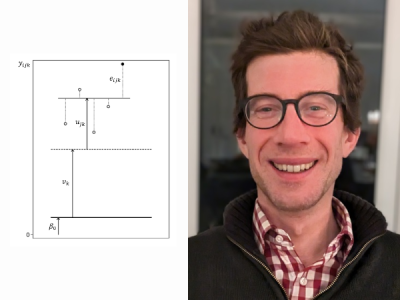
Am 7. und 8. Oktober veranstaltete der SFB 1342 einen Workshop mit dem renommierten Methodenexperten Prof. George Leckie, Professor für Sozialstatistik und Co-Direktor des Centre for Multilevel Modelling (CMM) an der School of Education der University of Bristol, zum Thema "Einführung in die Mehrebenenanalyse mit R". 14 Teilnehmende konnten dabei praktische Erfahrungen mit dieser Methode zur Analyse geclusterter Daten sammeln.

Der zweitägige Kurs bot eine Einführung in die Mehrebenenanalyse, ergänzt durch Übungen und Demonstrationen in R. Der Schwerpunkt lag auf Mehrebenenmodellen für kontinuierliche und binäre abhängige Variablen bei geclusterten Daten. Das Programm reichte von Random-Intercept-Modellen und Random-Coefficient-Modellen über Growth-Curve-Modelle und Drei-Ebenen-Modelle bis hin zur logistischen Mehrebenenregression. Während des gesamten Workshops standen die Interpretation der Modelle sowie die Forschungsfragen, für deren Beantwortung Mehrebenenmodelle konzipiert sind, im Mittelpunkt. Die Kombination aus methodischer Tiefe und praktischer Arbeit in R machte den Workshop zu einer bereichernden Erfahrung.

Geleitet wurde der Workshop von Professor George Leckie, Professor für Sozialstatistik und Co-Direktor des Centre for Multilevel Modelling (CMM) an der School of Education der University of Bristol (Großbritannien). Sein methodischer Schwerpunkt liegt auf der Entwicklung, Anwendung und Verbreitung von Mehrebenenmodellen und verwandten Verfahren zur Analyse von Daten aus dem Bildungs-, Sozial- und Gesundheitsbereich. Er ist Autor von mehr als 100 wissenschaftlichen Fachartikeln, von denen sich viele mit der Entwicklung oder Anwendung von Mehrebenenmodellen befassen. Zudem hat er bereits über 90 Kurse zur Mehrebenenanalyse in Großbritannien, Europa, Australien und den USA geleitet.


Kontakt:
Dr. Jakob Henninger
DeZIM e.V.
Mauerstraße 76
10117 Berlin
E-Mail: jakob.henninger@uni-bremen.de

(c) Maximilian Hohmann
Erkenntnisse aus dem informellen Sektor in der arabischen Welt

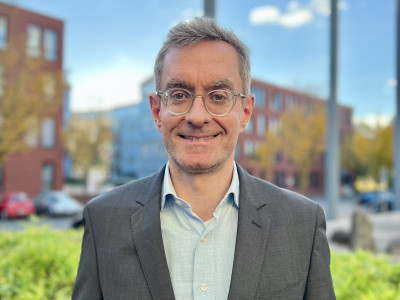
Prof. Dr. Steffen Hertog von der London School of Economics and Political Science (LSE) eröffnete mit seiner Präsentation am Mittwoch, 4. November 2026, die SFB 1342 Jour Fixe-Vortragsreihe im Wintersemester 2026/27. Durch das hybride Veranstaltungsformat konnten nicht nur zahlreiche Kolleginnen und Kollegen an der Universität Bremen, sondern auch weitere Interessierte online teilnehmen.

Why Do Labour Market Outsiders Refuse to Support Pro-Outsider Welfare Reforms? Evidence from the Informal Sector in the Arab World

Abstract:

Labour markets across the Global South are divided into formally employed "insiders" with contributory social security and informally employed "outsiders". Governments rarely redistribute towards the latter despite their potential majority. We ask whether outsiders themselves back such redistribution, taking Egypt as a most-likely case given its unusually deep insider-outsider gap and minimal mobility between the two groups. An original survey confronts respondents with concrete, locally embedded policy trade-offs that juxtapose pro-insider and pro-outsider policies. However defined and measured, outsiders support pro-outsider reform less than insiders — especially those in government employment — and no experimental framing, including one invoking social solidarity, shifts these attitudes. Low trust in government and doubt that new policies would benefit outsiders personally appear to mediate this result. Follow-up qualitative interviews trace such scepticism to disappointing experiences with existing health and cash-grant schemes and show that "outsider" is not a socially salient identity in Egypt, helping explain the political challenges faced by inclusive welfare reform in Egypt and beyond.

Steffen Hertog is Professor in Comparative Politics in the Department of Government at the London School of Economics and Political Science. He joined the Department of Government in 2010 as a lecturer. He was previously Kuwait Professor at Sciences Po Paris, lecturer in political economy at the University of Durham and post-doctoral research fellow at Princeton University. He holds an MA from the University of Bonn, an MSc from the School of Oriental and African Studies and a D.Phil. from the University of Oxford.


Kontakt:
Oussama Meftha
SFB 1342: Globale Entwicklungsdynamiken von Sozialpolitik
Mary-Somerville-Straße 3
28359 Bremen
E-Mail: omeftha@uni-bremen.de

(c) Social Policy Worldwide/Universität Bremen
Eine neue Zusammenarbeit im Bereich der globalen Sozialpolitik

In Kooperation mit dem Deutschen Institut für Interdisziplinäre Sozialpolitikforschung (DIFIS) hat der Sonderforschungsbereich 1342 "Globale Entwicklungsdynamiken von Sozialpolitik" die Redaktion des internationalen Blogs übernommen. Ansprechpersonen sind Johanna Ritter (DIFIS) und Dr. Maximilian Hohmann (SFB 1342). Gerade ist der erste neue Artikel online veröffentlicht worden:

"How Global Complementarities Shape Social Policy in the Global South" von Dr. Martín Cortina-Escudero

Social Policy Worldwide ist eine Plattform für Informationen, Austausch und öffentliche Debatten zu Fragen der Sozialpolitik, sozialen Ungleichheit und des gesellschaftlichen Zusammenhalts. Die Redaktion möchte den weltweiten Austausch fördern und den Dialog zwischen verschiedenen Weltregionen stärken – zwischen Forschenden, Fachpraktiker:innen sowie einer interessierten Öffentlichkeit, die sich mit sozialen Fragen auseinandersetzt.

Der Blog freut sich über Beiträge von Forschenden, Fachpraktiker:innen, Journalist:innen sowie Expert:innen zu den Themen Sozialpolitik, soziale Ungleichheiten und gesellschaftlicher Zusammenhalt.

Weitere Informationen unter: https://socialpolicyworldwide.org/


Kontakt:
Dr. Maximilian Hohmann
SFB 1342: Globale Entwicklungsdynamiken von Sozialpolitik
Mary-Somerville-Straße 3
28359 Bremen
Tel.: +49 421 218-57058
E-Mail: hohmann@uni-bremen.de

(c) Mai Mahmoud
(c) Mai Mahmoud
Montag, 19. Oktober 2026, Universität Bremen

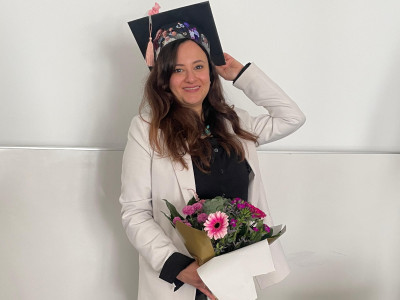
Die Doktorandin aus dem abgeschlossenen Teilprojekt A04 "Globale Entwicklungen in Gesundheitssystemen" konnte ihre mit Magna Cum Laude bewertete kumulative Dissertation am 19. Oktober 2026 präsentieren. Die Arbeit trägt den Titel "The Middle East and North Africa’s Pursuit of Universal Healthcare Coverage: A Multi-dimensional Analysis of Progress" und wurde von Dr. Lorraine Frisina-Doetter und Prof. Dr. Klaus Schlichte betreut.

This cumulative dissertation examined progress towards universal health coverage (UHC) in the Middle East and North Africa (MENA). It focused on five dimensions that influence UHC outcomes at the de jure and de facto levels, namely global factors, the wider structural context, health-system arrangements, formal healthcare entitlements, and social determinants such as citizenship and labour-market segmentation. Guided by the interdependencies framework of Nullmeier et al. (2022), it adopted a multidimensional perspective on UHC in which the global normative agenda is being mediated through the aforementioned national constellations.

The dissertation comprises three articles. The first paper analysed both the World Health Organization’s (WHO) reports and primary data from domestic legislation in Egypt and Morocco to examine the extent of alignment between health-insurance reforms and WHO recommendations between 2010 and 2022. The second article used a scoping review to collect information on enablers and barriers to UHC identified across three country cases representing varying income levels and service coverage scores: the United Arab Emirates, Morocco and Yemen. The third article used primary legislative data from legal texts and quantitative data from national surveys and ministerial reports to compare formal healthcare entitlements and nationality-disaggregated healthcare utilization among citizens and expatriates across the six Gulf Cooperation Council countries, drawing on complementary evidence concerning financial protection, unmet need and healthcare responsiveness.

Together, the studies highlight the importance of examining UHC beyond aggregate coverage indicators, formal entitlements and finance-centred perspectives. They demonstrate the value of considering international influences, domestic institutional conditions and societal differences to understand the varied pathways towards UHC across the region. The dissertation contributes to the fragmented literature on health determinants and to MENA literature that focuses on health-system barriers without linking them to de jure entitlements or situating the global normative agenda within those discussions. It also contributes to the literature on health equity, which focuses on inequities between different groups of citizens, and to the regional literature on the Gulf, which focuses on specific health domains or specific groups of migrants. Through this, it shows both patterns and variations in health policymaking in the MENA region.


Kontakt:
Mai Mohamed Abdou Mahmoud
(c) Patrick Pollmeier
Kommission soll Anfang 2027 Reformvorschläge erarbeiten

Der Leiter des SFB 1342-Teilprojekts A07 "Neue Politiken im alternden Wohlfahrtsstaat? Ein Vergleich von politischen Ergebnissen und Policy Feedback von Langzeitpflegepolitiken", Prof. Dr. Heinz Rothgang, wurde am 14.10.2026 in die Kommission berufen, die unter der Federführung des Bundesministeriums für Gesundheit für die Bundesregierung eingesetzt wurde, um Vorschläge für eine Reform der sozialen Pflegeversicherung zu erarbeiten.

Die Finanzierung der sozialen Pflegeversicherung stellt seit Jahren eines der drängendsten, gesundheitspolitischen Probleme und damit auch eines der zentralen Handlungsfelder der aktuellen Legislaturperiode dar. Zwar liegt inzwischen ein Kabinettsentwurf für das Pflegeneuordnungsgesetz (PNOG) vor, das im Januar 2027 in Kraft treten soll. Dieses kann aber nur kurzfristig Abhilfe bei den Finanzierungsproblemen der sozialen Pflegeversicherung leisten. Um die soziale Pflegeversicherung langfristig zu stabilisieren, braucht es eine Strukturreform. Für deren Ausgestaltung soll die neue Kommission die Ausgabenentwicklung der sozialen und privaten Pflegeversicherungen analysieren und Empfehlungen erarbeiten, insbesondere mit Blick auf Finanzierung, pflegerische Versorgung sowie präventive und rehabilitative Maßnahmen.

Erste Vorschläge sollen Ende Januar 2027 vorgelegt werden. "Die Zeit ist denkbar knapp, der Handlungsbedarf groß. Seit Jahren fordern wir eine grundlegende Pflegereform und haben dafür basierend auf unserer Forschung verschiede Vorschläge vorgelegt – es mangelt nicht an Ideen, sondern bisher am politischen Willen. Ich hoffe, dass wir mit der neuen Pflegestrukturkommission endlich die notwendigen Schritte für eine langfristige Stabilisierung der sozialen Pflegeversicherung und eine Verbesserung der pflegerischen Versorgung einleiten können", so Professor Rothgang.

Zur Pressemitteilung der Bundesregierung: https://www.bundesgesundheitsministerium.de/presse/pressemitteilungen/pflegekommission-eingesetzt


Kontakt:
Prof. Dr. Heinz Rothgang
SFB 1342: Globale Entwicklungsdynamiken von Sozialpolitik
Mary-Somerville-Straße 3
28359 Bremen
Tel.: +49 421 218-58557
E-Mail: rothgang@uni-bremen.de

(c) Maximilian Hohmann
8. und 9. Oktober 2026, Bremen

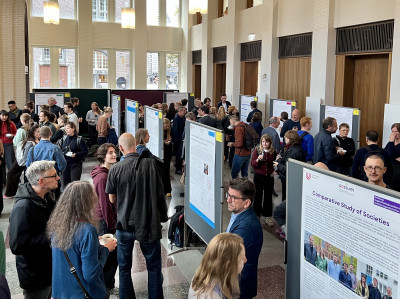
Zahlreiche Mitglieder des SFB 1342 "Globale Entwicklungsdynamiken von Sozialpolitik" beteiligten sich an der Tagung des wissenschaftlichen Beirats des SOCIUM. Am 8. und 9. Oktober 2026 wurde der Beirat in das Forum am Domshof in der Bremer City eingeladen. Neben den Gesprächen mit der Universitätsleitung und dem Sprecherteam wurden außerdem nicht nur Vorträge von einzelnen Arbeitsgruppen und Forschungsverbünden gehalten, in der großen Kassenhalle fand darüber hinaus eine Posterpräsentation statt.

Der Beirat berät den Vorstand bei der Aufstellung und Durchführung des wissenschaftlichen Arbeitsprogramms des SOCIUM und gibt hierzu Empfehlungen ab. Er nimmt zu den Ergebnissen von Forschungsprojekten Stellung. Der Beirat soll im Regelfall alle zwei Jahre zusammenkommen. Auf seinen regelmäßigen Sitzungen nimmt er auf Grundlage eines Tätigkeitsberichtes eine Bewertung der Arbeit des SOCIUM vor und berichtet darüber der Rektorin.

Weiterführende Informationen unter: SOCIUM Research Center on Inequality and Social Policy, Universität Bremen


Kontakt:
Dr. Maximilian Hohmann
SFB 1342: Globale Entwicklungsdynamiken von Sozialpolitik
Mary-Somerville-Straße 3
28359 Bremen
Tel.: +49 421 218-57058
E-Mail: hohmann@uni-bremen.de

(c) Oksana Chorna
(c) Oksana Chorna
Freitag, 2. Oktober 2026, 14:00 Uhr, Universität Bremen

Oksana Chorna verteidigte ihre Dissertation mit dem Titel "Internally displaced persons and welfare deservingness in wartime Ukraine: Welfare retrenchment, wartime solidarity, and recipient perspectives" am 2. Oktober 2026. Von September 2022 bis Dezember 2025 war sie im Projekt B06 "Rohstoffboom und Sozialpolitik in autoritären Regimen. Mittel strategischer Machtsicherung? (2022-25)" beschäftigt. Ihre Doktorarbeit wurde von Prof. Dr. Heiko Pleines, Prof. Dr. Sophia Hunger und Prof. Dr. Oksana Mikheieva (Europa-Universität Viadrina) betreut.

Oksanas Dissertation befasst sich mit der Entwicklung der Sozialpolitik für Binnenvertriebene in der Ukraine im Zeitraum von 2014 bis 2025. Ausgehend von der Deservingness-Theorie und dem CARIN-Rahmenkonzept untersucht sie, wie politische Entscheidungsträger, die breite Öffentlichkeit und die Sozialleistungsempfänger selbst die Anspruchsberechtigung von Binnenvertriebenen unter den Bedingungen von Krieg, Wirtschaftskrise und Sozialkürzungen konstruieren und bewerten.

Die Dissertation verfolgt ein Mixed-Methods-Design und umfasst drei miteinander verbundene Aufsätze. Der erste Aufsatz analysiert Gesetzestexte und Parlamentsdebatten aus den Jahren 2014 bis 2025, um die Entwicklung der Sozialpolitik für Binnenvertriebene sowie die Konstruktion ihrer Deservingness durch politische Entscheidungsträger nachzuzeichnen. Der zweite Aufsatz verwendet eigene Umfragedaten sowie Daten des Life in Transition Survey, um Veränderungen in den Hierarchien der Deservingness im Zeitverlauf sowie Unterschiede in den Wahrnehmungen zwischen Binnenvertriebenen und der Gesamtbevölkerung zu untersuchen. Der dritte Aufsatz stützt sich auf eigene Umfragedaten, um zu analysieren, wie Binnenvertriebene auf die jüngsten Einschränkungen der Anspruchsberechtigung für Leistungen für Binnenvertriebene reagieren.

Insgesamt zeigt die Dissertation, dass unter Bedingungen eines durch Krieg rasch ansteigenden Unterstützungsbedarfs kollektive Solidarität zu einem zentralen Mechanismus wird, der Einstellungen gegenüber Sozialleistungen und politische Entscheidungen prägt. Die Arbeit leistet einen Beitrag zur Deservingness-Forschung, indem sie deren Anwendung über westliche Wohlfahrtsstaatskontexte hinaus erweitert, die Perspektiven der Leistungsempfänger einbezieht und die dynamische sowie politisch kontingente Natur von Deservingness unter Bedingungen gesellschaftlicher Krisen aufzeigt.


Kontakt:
Oksana Chorna
(c) Maximilian Hohmann
Universität Bremen, 06.10.2026, 10:00-12:30

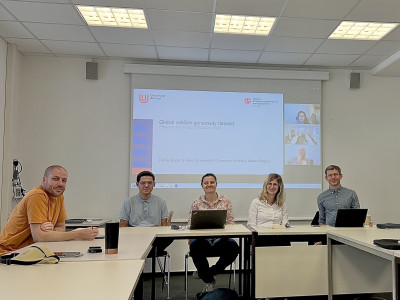
Am 6. Oktober 2026 fand der projektübergreifende Welfare Index Workshop statt. Das hybride Event wurde von Dr. Katren Rogers (A08), Dr. Aline Grünewald (A10) und Dr. Tobias Böger (A09) organisiert. Um eine standortübergreifende Teilnahme zu ermöglichen, wurde die Veranstaltung sowohl vor Ort als auch per Videokonferenz durchgeführt. Der Workshop diente der Vorstellung und Diskussion eines ersten Entwurfs von Indizes auf Politikfeld- und aggregierter Ebene.

Beschreibung:

Welfare state research relies on aggregate indicators, such as decommodification or generosity indices, to facilitate comparison over time and space and across diverse fields of social policy. The projects of the CRC 1342 have collected detailed institutional indicators, outcome measures and societal yardsticks during the first two phases, and started conceptualizing and measuring the inclusiveness and scope of benefits in their respective social policy fields. In the third phase, we are working to construct a unified set of measures to map the global varieties of social policy. The workshop presents a first draft of policy-field and aggregate indices for discussion and feedback.

Für weitere Informationen und Fragen steht das Organisationsteam sehr gerne zur Verfügung.


Kontakt:
Dr. Tobias Böger
SFB 1342: Globale Entwicklungsdynamiken von Sozialpolitik
Mary-Somerville-Straße 7
28359 Bremen
Tel.: +49 421 218-57068
E-Mail: tobias.boeger@uni-bremen.de

Dr. Aline Grünewald
SFB 1342: Globale Entwicklungsdynamiken von Sozialpolitik
Mary-Somerville-Straße 5
28359 Bremen
Tel.: +49 421 218-58601
E-Mail: aline.gruenewald@uni-bremen.de

Katren Rogers
SFB 1342: Globale Entwicklungsdynamiken von Sozialpolitik, Institut für Interkulturelle und Internationale Studien
Mary-Somerville-Straße 9
28359 Bremen
Tel.: +49 421 218-67471
E-Mail: rogers@uni-bremen.de

Suchergebnis: