

News

Here you can find the latest updates on the Collaborative Research Centre "Global Dynamics of Social Policy": summaries of current research results, references to our latest publications, outcomes of events and more news from the projects and their staff members.


(c) Maximilian Hohmann
News about Global Dynamics of Social Policy

The Collaborative Research Center "Global Dynamics of Social Policy" is represented on Bluesky as well as on Mastodon and X. On these channels you will always find the latest news about the CRC 1342.

Furthermore, we also recommend the blog Social Policy Worldwide of the SOCIUM Research Center Inequality and Social Policy at the University of Bremen.


Contact:
Dr. Maximilian Hohmann
CRC 1342: Global Dynamics of Social Policy
Mary-Somerville-Straße 3
28359 Bremen
Phone: +49 421 218-57058
E-Mail: hohmann@uni-bremen.de

Application Deadline: 18.02.2026

As part of the Collaborative Research Centre (CRC) 1342 on "Global Dynamics of Social Policy", Project A07 on "New Politics of the Ageing Welfare State? Comparing Political Outcomes and Policy Feedback of Long-term Care Policies" will examine how LTC policies shape politics and political systems, drawing on policy feedback theory. Specifically, we will examine how far the type, scope of benefits, and inclusiveness of national LTC systems influence political outcomes across three areas: public political attitudes and behaviour, interest groups, and political elites. The project also includes qualitative case studies on Germany, South Korea, and Uruguay.
You can find more information on the project here. The project team is located at the University of Bremen and the University of Duisburg-Essen. The main project language is English.

We are looking for a student assistant with 30 to 40 hours of work per month (by agreement) at the University of Bremen, starting April 2026. The position is initially limited until 31.12.2026 (extension possible).

Tasks:
- Assist with data collection and data management (e.g., research on international data and documents, compiling and formatting data sets).
- Literature research and management
- Support with preparing publications
- Support in project organisation (e.g. minutes of project meetings, communication with cooperation partners).

Requirements:
- Enrolment at a German university
- Student of a political, social or health science study programme (e.g. political science, sociology, social policy, public health)
- Interest in comparative social policy research and/or long-term care systems, preferably with already existing knowledge in these areas
- Experience in scientific work (e.g. citation rules and literature research), preferably also in qualitative and/or quantitative empirical analysis and related IT programs (e.g. Excel, Endnote, R, Maxqda)
- Very good command of written and spoken English
- Very good (self-)organisational skills, communication skills and ability to work in a team

We offer a collegial working environment in a friendly, interdisciplinary and diverse team. The position provides insights into the work of a university research project and into the practice of empirical, international comparative social policy research. In case of interest, there is the possibility to participate in (online) meetings and lectures of the A07 project, the CRC 1342 and the Socium.
Working hours and location are flexible by arrangement. The salary is based on the usual rates for student assistants at the University of Bremen.

If you have any questions about the position, please feel free to contact Davide Viero (davide.viero@uni-due.de, Tel. +49 (0)201 183 3509). To apply, please send your documents, including a short letter of motivation, CV and certificate/transcript as a single PDF by 18.02.26 via e-mail to Davide Viero (davide.viero@uni-due.de). Please include the preferred number of monthly working hours and the preferred starting month in your application. We look forward to hearing from you!


Contact:
Davide Viero
CRC 1342: Global Dynamics of Social Policy, Faculty of Education
Universitätsstraße 2
45141 Essen
E-Mail: davide.viero@uni-due.de

(c) Maximilian Hohmann
05.02.2026

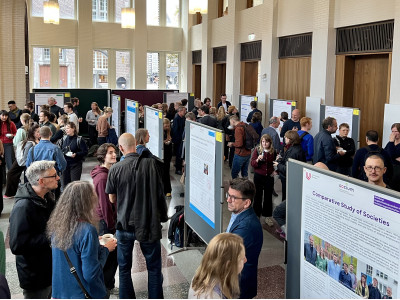
The Annual Conference of the SOCIUM - Research Center on Inequality and Social Policy - was held on 05.02.2026 in the Rotunde of the Cartesium building at the University of Bremen. The collegial exchange focused on mutual reporting on current research findings and strategic initiatives. Participating institutions included, alongside SOCIUM, the Collaborative Research Centre (CRC) 1342 "Global Dynamics of Social Policy" and the German Institute for Interdisciplinary Social Policy Research (DIFIS).


Contact:
Dr. Maximilian Hohmann
CRC 1342: Global Dynamics of Social Policy
Mary-Somerville-Straße 3
28359 Bremen
Phone: +49 421 218-57058
E-Mail: hohmann@uni-bremen.de

(c) Patrick Pollmeier
Funding phase 2026-2029

The start of the new year marks the beginning of the third and final phase of the Collaborative Research Center "Global Dynamics of Social Policy". A continuing research programme has been developed for the period from 1 January 2026 to 31 December 2029. This phase focuses on the socioeconomic effectiveness of social policy and its impact on political integration.

A concise overview as well as a detailed description of the research programme is available [here]. It follows on from the two previous phases I (2018-2021) and II (2022-2025).

In addition, information on all 13 projects of the third funding phase (2026–2029) can be found [here]. Several positions are currently being advertised to complete the research teams (application deadline: 14 January 2026). [Job Vacancies]

Further information about CRC 1342, including contact details, is available [here].


Contact:
Dr. Irina Wiegand
CRC 1342: Global Dynamics of Social Policy
Mary-Somerville-Straße 5
28359 Bremen
Phone: +49 421 218-58508
E-Mail: irina.wiegand@uni-bremen.de

Job Vacancies - University of Bremen

The Collaborative Research Center "Global Dynamics of Social Policy" is recruiting staff for its third phase. This final funding period will run for four years, from January 2026 to December 2029.

The following positions were advertised:

Doctoral Researcher (f/m/d) in Computational Social Science in Information Management Project (INF)

Doctoral Researcher (f/m/d) in project B13 "Welfare States and Protest: Understanding the Contentious Outcomes of Social Policy in Africa"

Doctoral Researcher (f/m/d) in project B14 "Socially Motivated Reasoning in Social Policy Evaluation"

Doctoral Researcher (f/m/d) in project B15 "Under Global Shock: Outcomes of Different Social Protection Programs in Britain, Chile, and Germany, 1970-2000"

Doctoral Researcher (f/m/d) in project B15 "Under Global Shock: Outcomes of Different Social Protection Programs in Britain, Chile, and Germany, 1970-2000"

Doctoral Researcher (f/m/d) in project B15 "Under Global Shock: Outcomes of Different Social Protection Programs in Britain, Chile, and Germany, 1970-2000"

Closing date: 14.01.2026


Contact:
Dr. Irina Wiegand
CRC 1342: Global Dynamics of Social Policy
Mary-Somerville-Straße 5
28359 Bremen
Phone: +49 421 218-58508
E-Mail: irina.wiegand@uni-bremen.de

(c) Maximilian Hohmann
Press Release (21.11.2025)

The German Research Foundation (DFG) is supporting the Collaborative Research Center 1342 "Global Dynamics of Social Policy" in a third phase for another four years until the end of 2029. In total, over nine million euros have been made available to successfully complete the twelve-year research agenda.

On November 21, 2025, the German Research Foundation's Review Committee for Collaborative Research Centers announced that it would continue to fund CRC 1342 for another four years with over nine million euros. The third funding phase will begin on January 1, 2026.

"We are thrilled about this outstanding success for our university and its partner institutions", commented Prof. Dr. Jutta Günther, President of the University of Bremen. "Over the past eight years, CRC 1342 has established itself as a renowned institution that will now continue to be able to make an important contribution to its interdisciplinary research area for another four years."

Collaborative Research Centers are among the largest and most important research networks supported by the DFG. CRC 1342 began its work in 2018. In addition to SOCIUM as the anchor institute, CRC 1342 involves other research institutes and facilities at the University of Bremen, Constructor University Bremen, Bielefeld University, Marburg University, the University of Bamberg, the University of Mannheim, and the University of Duisburg-Essen. Several non-university research institutes are also participating, including the Research Centre for East European Studies and the German Center for Integration and Migration Research (DeZIM).

In 13 subprojects, around 80 researchers from the fields of political science, sociology, history, geography, law, and computer science are investigating the global effectiveness of state-sponsored social policy. The two funding phases have so far resulted in hundreds of publications in international, peer-reviewed journals, in the form of monographs, anthologies, and policy briefs.

In the third phase, which will begin in January 2026, two project areas will examine how social programs contribute to improving social living conditions and support political integration. In project area A, six subprojects will investigate how social policy affects social and political structures worldwide. In area B, six further subprojects will analyze the social and political consequences of social policy measures in selected countries and regions of the world. The Information Infrastructure Project (INF) will further expand the Global Welfare State Information System (WeSIS). The web-based, interactive system went online in the second funding phase and has been available to researchers and the public free of charge ever since.

Contact:
Prof. Dr. Markus Tepe
University of Bremen
SOCIUM – Research Center on Inequality and Social Policy
Phone: +49 421 218-58520
Email: markus.tepe@uni-bremen.de


Contact:
Dr. Maximilian Hohmann
CRC 1342: Global Dynamics of Social Policy
Mary-Somerville-Straße 3
28359 Bremen
Phone: +49 421 218-57058
E-Mail: hohmann@uni-bremen.de

(c) Dario Landau
(c) Dario Landau
27 November 2025, 13:00-14:00 (CET)

Dr. Gulnaz Isabekova-Landau, a postdoctoral researcher in the Collaborative Research Centre 1342, will serve as one of the two discussants in the webinar "Panel discussion on social determinants of tuberculosis". She is part of project B06 "Resource Boom and Social Policy in Authoritarian Regimes. A Means of Securing Regime Stability?".

The webinar will take place on 27 November 2025 from 13:00 to 14:00 (CET). It is organized by the European Respiratory Society, one of the leading medical organizations in the respiratory field, and UNITE4TB, a public-private partnership dedicated to developing more effective treatment regimens and drugs to address drug-resistant tuberculosis.

The webinar will focus on global health equity objectives and tuberculosis control strategies by contributing to a better understanding and improved targeting of common social determinants of tuberculosis, including poverty, poor housing, and malnutrition, among other factors. Participation is free of charge but requires prior registration with the European Respiratory Society.

Further information is available at:

https://channel.ersnet.org/media-114799-panel-discussion-on-social-determinants-of-tuberculosis-a-global-perspective-27-november-2025


Contact:
Dr. Gulnaz Isabekova-Landau
(c) University of Bremen/ILO
23 and 24 October, 2025, in Geneva

On 23 and 24 October, 2025, the team of project A03 "Worlds of Labour: Coverage and Generosity of Employment Law" held a workshop in the International Labour Office (ILO) in Geneva. It aimed to communicate and discuss results of A03 eight years of research, including recent publications and the databases on the evolution of labour law.

A particular objective of the workshop was to present to ILO experts and to a broader audience, the recently published book "Constructing Worlds of Labour" edited by Ulrich Mückenberger, Heiner Fechner and Irene Dingeldey, within the CRC 1342-book series. It was co-organised by the CRC A03-team and the ILO-Research Department in cooperation with ILO´s International Labour Standards Department and the Labour Governance Unit.

The format of the workshop was twofold.

A more public part was a hybrid session headed by Aristea Konkiadakis (Research). Here, Irene Dingeldey, Heiner Fechner and Ulrich Mückenberger presented the CRC 1342, the book, and the further results stemming from the two phases of the A03-project. The focus was on the findings in how far employment law has a protective function and in how far it contributes to labour market segmentation – particularly from a gender perspective. From the Norms-Department, Naj Ghosheh commented. The following discussion was constructive. All participants recognised the rich results of the A03-work and the book. However, they underlined the practical und organisational difficulties to effectively overcome legal segmentation.

The second half day was a more internal deliberation on the content, value and future of the databases established by A03 and the WeSIS-team. Opening remarks were delivered by Caroline Fredrickson, Director of Research. Marina Carlino, Heiner Fechner (both CRC), and Jenny Hahs (Institute Institute for Work, Skills and Training, University of Duisburg Essen, but former member of A03) presented the databases (WeSIS, WoL, and HILODB <history of ILO-data base>) developed and used by the project. All three mentioned ILO-departments were attending. The assistant to Corinne Vargha (Director of the Norm Department with whom one of the A03-PIs had a meeting the day before) expressed her interest in the data bases. Claude Donald Loiselle (coordinator of the international cooperation in Occupational Safety and Health (OSH) described the history of an OSH-oriented electronical archive which started with enthusiasm and more and more lost ground due to lack of resources and support.

The visit in Geneva took place in a warm and welcoming atmosphere. It demonstrated the relevance of our research, from the point of view of the practical ILO-actors. The fact that the "Worlds of Labour" project, in its legal segmentation approach, is substantially critical of certain ILO-norms and activities, was well-accepted. Gender- and race-based normative segmentation seems to be recognised as an important problem in organisations like the ILO. It seems to be a question of both financial and power resources within this organisation to take effective steps against legal segmentation.


Contact:
Prof. Dr. Irene Dingeldey
Dr. Heiner Fechner
Prof. Dr. Ulrich Mückenberger
(c) Sage Publications
New Article in "Global Social Policy"

In a new article published in "Global Social Policy", Kerem Gabriel Öktem - working in project B01 on "Mechanisms of Social Policy Diffusion" - and Prof. Lutz Leisering from the University of Bielefeld explore the development of social assistance regimes in middle income countries, with a specific focus on the case of Turkey.

"Emerging social assistance regimes in middle income countries: Turkey in comparative perspective" (https://journals.sagepub.com/doi/10.1177/14680181251384653)

Countries in the global South have expanded social security significantly since the late 1990s. What kind of social security are they heading for? Are they following models from the global North, or are genuinely Southern models building up? Focussing on middle income countries (MIC) and on the last safety net, social assistance, the authors investigate the social assistance regime that has emerged in Turkey and situate the Turkish case in the broader context of the global South and North. For this purpose, the authors draw on a rich variety of historical and new Turkish policy documents and on partially self-constructed quantitative data on the global South and North, which was generated by the research project FLOOR:

https://www.uni-bielefeld.de/fakultaeten/soziologie/forschung/projekte/floorcash/

While most MIC have adopted social assistance programmes, which are a Northern model, the authors find that the institutional design, the objectives, the institutionalisation, and the scale of social assistance differ fundamentally from European models. The case of Turkey confirms this finding, and also exemplifies the formative influence of international organisations, such as the World Bank, on MIC. While some distinctive features may indicate deficiencies of "Southern" social assistance, others may be seen as appropriate adaptations of a Northern model to development contexts.


Contact:
Dr. Kerem Gabriel Öktem
(c) Julia Shu-Huah Wang
Jour Fixe on 15.10.2025

Dr. Julia Shu-Huah Wang from National Taiwan University was invited by project B01 "Mechanisms of Social Policy Diffusion" to the University of Bremen for the start of the CRC 1342 Jour Fixe event series in the winter semester 2025/26. On 15 October 2025, she gave a lecture entitled "Social Safety Net Features from a Global Perspective".

Abstract

Introduction: While poverty reduction is a primary objective of the Sustainable Development Goals (SDGs), our understanding of how countries differ in designing social safety nets remains limited. Previous international comparative studies have largely focused on either advanced economies (Gough et al., 1997; Natili, 2020; Nelson, 2012; Marchal & Marx, 2024) or developing countries (e.g., Barrientos, 2013). However, as developing countries rapidly expand their social protection systems and societal challenges increasingly converge across regions, cross-regional comparisons that bridge the Global North and South offer valuable opportunities for mutual learning. This study examines key features of social safety nets in 48 countries across continents. Using newly collected model family data, we compare the generosity levels and family values embedded in social safety net design.

Methods: We use the model family approach to collect income package data for 20 hypothetical household profiles in each of the 48 countries. These profiles vary in income level (e.g., no income, minimum wage, national average wage, and dual earners) and family composition (e.g., single adult, two adults, single parents, and two-parent households with children). Each income package includes labor earnings, welfare benefits, taxes, and social security contributions. Welfare benefits span several categories, including social assistance, housing support, child-related benefits (e.g., child allowances, childcare, and education subsidies), and other targeted subsidies. Data are compiled based on policy rules and government reports in each country. To classify countries, we conduct ward cluster analysis using six indicators across two policy dimensions: generosity across income spectrums: families with no earners, low-wage earners, and average-wage earners; and family values embedded in social safety nets: Individualization, child-focused, and marriage-focused.

Results and Conclusion: Four income-based clusters and three family-value clusters are identified. Specifically, four income-based clusters are: generous for all, generous for lower earnings, generous for average earnings, and least generous. Three family-value clusters are: individualized and pro-marriage, neutral, and child-centered. Results show that more generous welfare systems—whether for all income groups or for lower earners—are significantly less likely to emphasize individualized and pro-marriage values. By contrast, less generous systems are more frequently associated with individualized and pro-marriage orientations or, in some cases, child-centered welfare priorities. Regional patterns show that East Asian societies are generally more generous and pro-child, while most European nations fall into moderately generous and neutral clusters. Developing regions tend to be less generous, yet societies in Latin America, Southeast Asia, and sub-Saharan Africa lean toward individualization, while post-Soviet and Eastern European societies tend toward child-centeredness. Liberal welfare societies such as Australia and the United States fall into the generous-for-lower-income and child-focused clusters. This study reveals distinct configurations in the design of social safety nets. By identifying key safety net patterns, this study contributes to theoretical debates on welfare state variation and provides practical insights for policymakers aiming to evaluate and reform their national safety net systems.

Dr. Julia Shu-Huah Wang is an Associate Professor at Department of Social Work, National Taiwan University. Her research focuses on social welfare policies, poverty alleviation interventions, immigration policies, and the well-being of families. She is currently working on several research projects, including global welfare regimes; social safety nets in East Asia; social welfare policies during COVID-19; impacts of social policies on families; and impacts of migration policies. Prior to joining National Taiwan University, she was an assistant professor at the University of Hong Kong. Dr. Wang received her Bachelor’s degree from National Taiwan University and her PhD degree from Columbia University School of Social Work.