News

Here you can find the latest updates on the Collaborative Research Centre "Global Dynamics of Social Policy": summaries of current research results, references to our latest publications, outcomes of events and more news from the projects and their staff members.


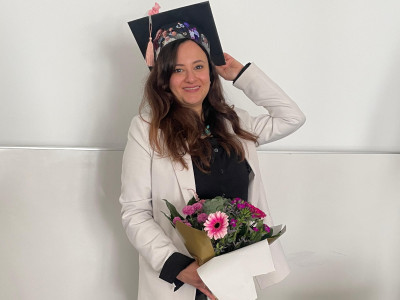
(c) Mai Mahmoud
(c) Mai Mahmoud
Monday, 19 October 2026, University of Bremen

The Doctoral Researcher from completed Project A04 "Global Developments in Health Care Systems" presented her cumulative dissertation, which was awarded the distinction Magna Cum Laude, on 19 October 2026. Entitled “The Middle East and North Africa’s Pursuit of Universal Healthcare Coverage: A Multi-dimensional Analysis of Progress,” the dissertation was supervised by Dr. Lorraine Frisina-Doetter and Prof. Dr. Klaus Schlichte.

This cumulative dissertation examined progress towards universal health coverage (UHC) in the Middle East and North Africa (MENA). It focused on five dimensions that influence UHC outcomes at the de jure and de facto levels, namely global factors, the wider structural context, health-system arrangements, formal healthcare entitlements, and social determinants such as citizenship and labour-market segmentation. Guided by the interdependencies framework of Nullmeier et al. (2022), it adopted a multidimensional perspective on UHC in which the global normative agenda is being mediated through the aforementioned national constellations.

The dissertation comprises three articles. The first paper analysed both the World Health Organization’s (WHO) reports and primary data from domestic legislation in Egypt and Morocco to examine the extent of alignment between health-insurance reforms and WHO recommendations between 2010 and 2022. The second article used a scoping review to collect information on enablers and barriers to UHC identified across three country cases representing varying income levels and service coverage scores: the United Arab Emirates, Morocco and Yemen. The third article used primary legislative data from legal texts and quantitative data from national surveys and ministerial reports to compare formal healthcare entitlements and nationality-disaggregated healthcare utilization among citizens and expatriates across the six Gulf Cooperation Council countries, drawing on complementary evidence concerning financial protection, unmet need and healthcare responsiveness.

Together, the studies highlight the importance of examining UHC beyond aggregate coverage indicators, formal entitlements and finance-centred perspectives. They demonstrate the value of considering international influences, domestic institutional conditions and societal differences to understand the varied pathways towards UHC across the region. The dissertation contributes to the fragmented literature on health determinants and to MENA literature that focuses on health-system barriers without linking them to de jure entitlements or situating the global normative agenda within those discussions. It also contributes to the literature on health equity, which focuses on inequities between different groups of citizens, and to the regional literature on the Gulf, which focuses on specific health domains or specific groups of migrants. Through this, it shows both patterns and variations in health policymaking in the MENA region.


Contact:
Mai Mohamed Abdou Mahmoud
(c) Patrick Pollmeier
Commission to develop reform proposals by early 2027

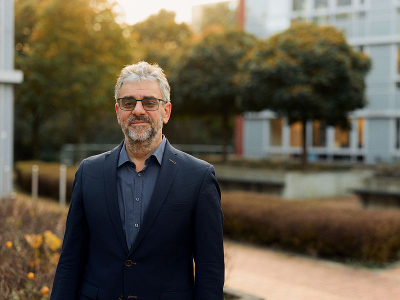
Project Director of CRC 1342 Project A07 "New Politics of the Ageing Welfare State? Comparing Political Outcomes and Policy Feedback of Long-term Care Policies", Prof. Dr. Heinz Rothgang, was appointed to the commission on 14 October 2026, established under the leadership of the Federal Ministry of Health to develop proposals for reforming the public long-term care insurance system on behalf of the German federal government.

Financing the public long-term care insurance system has been one of the most pressing health policy issues for years, making it a central focus of the current legislative term. A cabinet draft of the Long-Term Care Restructuring Act (Pflegeneuordnungsgesetz, PNOG), set to take effect in January 2027, is now available. However, it can only provide short-term relief for the financing problems facing public long-term care insurance. Structural reform is needed to stabilize the system over the long term. To shape this reform, the newly appointed commission will analyze spending trends in both public and private long-term care insurance to develop recommendations regarding funding, care services, and preventive and rehabilitative measures.

The commission is to submit initial proposals by the end of January 2027. "Time is extremely tight and the need for action is great. For years we have been calling for fundamental reform of long-term care and have presented various proposals based on our research. There has been no shortage of ideas but rather a lack of political will. I hope that with the new Commission on Long-Term Care Structures, we can finally take the necessary steps towards stabilizing the long-term care insurance system and improving care provision," says Prof. Rothgang.

For the press release of the federal government: www.bundesgesundheitsministerium.de/presse/pressemitteilungen/pflegekommission-eingesetzt


Contact:
Prof. Dr. Heinz Rothgang
CRC 1342: Global Dynamics of Social Policy
Mary-Somerville-Straße 3
28359 Bremen
Phone: +49 421 218-58557
E-Mail: rothgang@uni-bremen.de

(c) Maximilian Hohmann
8 and 9 October 2026, Bremen

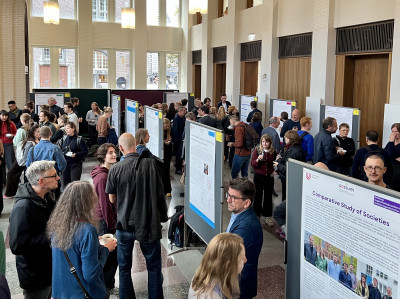
Numerous members of CRC 1342 "Global Dynamics of Social Policy" participated in the meeting of the SOCIUM Scientific Advisory Board. On 8 and 9 October 2026, the Board was invited to the Forum am Domshof in central Bremen. In addition to discussions with the University Executive Board and the Spokesperson team, the programme featured presentations by individual research groups and research consortia. A poster session was also held in the great Banking Hall.

The advisory board gives support to the management as regards the setting up and implementing of the scientific program of the SOCIUM and makes recommendations. It comments on the results of the research projects. As a general rule the advisory board meets every two years. At its regular meetings and on the basis of an comprehensive report, an evaluation of the work of the SOCIUM takes place and is reported to the rector.

Further information: SOCIUM Research Center on Inequality and Social Policy, Universität Bremen


Contact:
Dr. Maximilian Hohmann
CRC 1342: Global Dynamics of Social Policy
Mary-Somerville-Straße 3
28359 Bremen
Phone: +49 421 218-57058
E-Mail: hohmann@uni-bremen.de

(c) Oksana Chorna
(c) Oksana Chorna
Friday, 2 October 2026, 14:00, University of Bremen

Oksana Chorna defended her dissertation titled "Internally displaced persons and welfare deservingness in wartime Ukraine: Welfare retrenchment, wartime solidarity, and recipient perspectives" on 2 October 2026. From September 2022 to December 2025, she was employed in project B06, "Resource Boom and Social Policy in Authoritarian Regimes. A Means of Securing Regime Stability? (2022-25)". The PhD thesis was supervised by Prof. Dr. Heiko Pleines, Prof. Dr. Sophia Hunger and Prof. Dr. Oksana Mikheieva (European University Viadrina).

Oksana’s dissertation examines the development of social policy for internally displaced persons (IDPs) in Ukraine between 2014 and 2025. Drawing on deservingness theory and the CARIN framework, it investigates how policymakers, the general population, and welfare recipients themselves construct and evaluate deservingness of IDPs under conditions of war, economic crisis, and welfare retrenchment.

The dissertation employs a mixed-methods design across three interconnected papers. The first paper analyses legislative documents and parliamentary debates from 2014 to 2025 to trace the evolution of IDP welfare policy and the construction of deservingness of IDPs by policymakers. The second paper uses original survey data alongside the Life in Transition Survey to examine changes in deservingness hierarchies over time and differences in perceptions between IDPs and the broader population. The third paper draws on original survey data to assess how IDPs respond to recent restrictions in eligibility for IDP benefit.

Overall, the dissertation argues that under conditions of rapidly increasing need caused by war, collective solidarity becomes a key mechanism shaping welfare attitudes and policy outcomes. It contributes to deservingness research by extending its application beyond Western welfare contexts, incorporating recipient perspectives, and demonstrating the dynamic and politically contingent nature of deservingness under conditions of societal crisis.


Contact:
Oksana Chorna
(c) Maximilian Hohmann
University of Bremen, 06.10.2026, 10:00-12:30

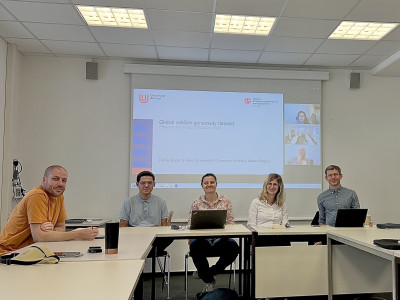
On 6 October 2026, the cross-project Welfare Index Workshop took place. The hybrid event was organized by Dr. Katren Rogers (A08), Dr. Aline Grünewald (A10), and Dr. Tobias Böger (A09). To facilitate participation across different locations, the workshop was held both in person and via videoconference. During the workshop, participants discussed a first draft of policy-field and aggregate indices and provided feedback.

Description:

Welfare state research relies on aggregate indicators, such as decommodification or generosity indices, to facilitate comparison over time and space and across diverse fields of social policy. The projects of the CRC 1342 have collected detailed institutional indicators, outcome measures and societal yardsticks during the first two phases, and started conceptualizing and measuring the inclusiveness and scope of benefits in their respective social policy fields. In the third phase, we are working to construct a unified set of measures to map the global varieties of social policy. The workshop presents a first draft of policy-field and aggregate indices for discussion and feedback.

The organizers are happy to provide further information and answer any questions.


Contact:
Dr. Tobias Böger
CRC 1342: Global Dynamics of Social Policy
Mary-Somerville-Straße 7
28359 Bremen
Phone: +49 421 218-57068
E-Mail: tobias.boeger@uni-bremen.de

Dr. Aline Grünewald
CRC 1342: Global Dynamics of Social Policy
Mary-Somerville-Straße 5
28359 Bremen
Phone: +49 421 218-58601
E-Mail: aline.gruenewald@uni-bremen.de

Katren Rogers
CRC 1342: Global Dynamics of Social Policy, Institute for Intercultural and International Studies
Mary-Somerville-Straße 9
28359 Bremen
Phone: +49 421 218-67471
E-Mail: rogers@uni-bremen.de

(c) Adobe Stock
(c) Adobe Stock
Information Management Project

The Collaborative Research Centre 1342 analyses the global dynamics of public social policy. The CRC 1342 works as an umbrella for a total of 13 projects in the third and final phase. The Information Management Project (INF project) provides the central infrastructure where the research data from all projects are accumulated in an information management system "Advancing the Global Welfare State Information System (WeSIS), eScience Services and Research Data Management". We are looking for a student assistant to support the technical operation and further development of the IT infrastructure for a research project developing and maintaining a social science data repository and its associated website (up to 70 hours/month) starting from 2027. The salary is in accordance with the current collective agreement of the state of Bremen. Send your CV and/or portfolio to: tany@uni-bremen.de


Job description:

  • Supporting the administration and maintenance of Linux servers
  • Monitoring system availability, performance, and resource usage
  • Installing, configuring, and updating software and server services
  • Supporting the operation of web applications and related infrastructure
  • Managing user accounts, permissions, and access rights
  • Assisting with backups, system documentation, and basic IT security tasks
  • Troubleshooting technical issues and documenting solutions
  • Supporting the deployment and maintenance of services used by the social science data repository
  • Helping to automate recurring administrative tasks using scripting or configuration tools
  • Collaborating with researchers and other technical team members on infrastructure-related tasks


Your profile:

  • Ongoing studies in Computer Science, Digital Media, Interface design, or other similar subjects are welcome. In exceptional cases, a portfolio of previous work experiences is also welcome when the study programs do not match directly
  • Basic experience with Linux and the command line
  • An interest in server administration and web technologies
  • Familiarity with basic networking concepts such as SSH, DNS, HTTP/HTTPS, or TCP/IP
  • Programming or scripting experience, e.g., Bash, Python, or similar
  • A careful and structured approach to technical tasks
  • An interest in learning new technologies and working independently
  • Good communication skills and the ability to document technical work clearly
  • Good knowledge of English is a must as we are an English-speaking team
  • Flexible working hours with the possibility of home-office


Deadline for application:

30 November, 2026

Contact: Nadera Sultana Tany

Mail: tany@uni-bremen.de


Contact:
Nadera Sultana Tany
CRC 1342: Global Dynamics of Social Policy
Mary-Somerville-Straße 7
28359 Bremen
Phone: +49 421 218-58600
E-Mail: tany@uni-bremen.de

(c) CRC 1342/University of Bremen
edited by Ivo Mossig (INF), Sarah Berens (B14) and Aysegül Kayaoglu (B06)

As announced previously, INF has successfully secured funding for an edited volume in the third phase of the CRC. This volume aims to demonstrate how WeSIS data can be effectively used to analyze the introduction (CRC Phase 1), design (CRC Phase 2), and outcomes (CRC Phase 3) of social policies worldwide. The core idea behind this volume is to make our CRC indicators conceptually and practically accessible to the research community by analyzing (and visualizing) them and, in doing so, to raise awareness of and promote our data. For this purpose, we consider it important to cover all three research phases of CRC 1342. We will therefore circulate this call among former members from the first two phases.

While all contributions must directly engage with WeSIS data, we particularly welcome so-called "tandem contributions", i.e. co-authored chapters in which one or more authors are not members of CRC 1342. Co-authorship with researchers outside the CRC is encouraged but not mandatory. The edited volume can thus serve as a multiplier for the use of WeSIS data, increasing its visibility and recognition among the broader community of social policy researchers at other institutions. This is vital for the long-term development and use of WeSIS. INF will offer small training workshops for external collaborators; CRC members are also very welcome to attend.

As discussed in the PI meeting, we aim to include relatively concise contributions of 3,000–4,000 words (excluding references).

Why participate?

In our view, this volume offers an excellent opportunity to highlight the broader contexts and research questions underlying your own project work. The aim is to showcase some of the data that you and other CRC members have so meticulously collected since the establishment of CRC 1342 in 2018. The edited volume provides space to visualize descriptive patterns of welfare state development, to compare multiple countries or regions, or to zoom in on a specific case – material that is often highly interesting but rarely makes it into space-constrained journal articles. It also offers the opportunity to introduce and present your indicators to the relevant research community as well as to policy experts and practitioners working in the field. We are particularly interested in analytical contributions that test theoretical arguments with WeSIS data. However, descriptive contributions that address a clearly defined research question or reveal interesting empirical puzzles are equally welcome. Furthermore, the volume provides a valuable platform for doctoral researchers to document the context, preliminary investigations, and initial findings of their qualification projects that make use of WeSIS data.

How to Participate? - Call for Abstracts

As a first step, we kindly invite all projects from all three phases to participate by submitting an abstract of 250–400 words. In addition to the names and affiliations of all authors, including any external co-authors, abstracts should address the following aspects:

  • What is the research question, objective, or goal of the contribution?
  • To which of the following thematic sections does your contribution fit best?
    a) Introduction of social policies and diffusion of the welfare state (CRC Phase 1),
    b) Design of social policies: Inclusiveness and scope of benefits (CRC Phase 2),
    c) Social policy outcomes (CRC Phase 3)
    d) Methods: Using WeSIS Data to map global social policies?
  • What is the geographical scope of the contribution?
    a) global, b) regional (e.g., EU, Africa, OECD), or c) national?
  • Which WeSIS data will be used, and how? Please feel free to contact the INF team if you need support, for example in identifying or selecting suitable data.


If you plan to include a specially designed illustration, figure, or map in your contribution, please indicate this in the abstract as well.

Timeline:

31.10.2026:  Submission of abstracts by e-mail to Ivo, Sarah and Aysegül
(mossig@uni-bremen.de, sarah.berens@uni-bremen.de, ayseguel.kayaoglu@uni-mannheim.de)

Jan. 2027:    Feedback on abstracts and workshops on using WeSIS data

30.04.2027:  Submission of first drafts, followed by internal peer review

30.06.2027:  Feedback returned to authors

31.09.2027:  Submission of revised/final versions

30.11.2027:  If necessary final feedback and submission of final revisions; completion of the final manuscript and submission to the publisher

Spring 2028: Publication of the book

We look forward to receiving your abstracts and to any feedback or questions you may have.

Best regards,

Ivo, Sarah & Aysegül


Contact:
Prof. Dr. Sarah Berens
CRC 1342: Global Dynamics of Social Policy
Mary-Somerville-Straße 5
28359 Bremen
Phone: +49 421 218-58603
E-Mail: sarah.berens@uni-bremen.de

Dr. Aysegul Kayaoglu
MZES
A5, 6
68159 Mannheim
E-Mail: ayseguel.kayaoglu@uni-mannheim.de

Prof. Dr. Ivo Mossig
CRC 1342: Global Dynamics of Social Policy
Mary-Somerville-Straße 7
28359 Bremen
Phone: +49-421-218 67410
E-Mail: mossig@uni-bremen.de

(c) Cedric Meyer
(c) Cedric Meyer
Five-week research trip in July and August 2026

Cedric Meyer, Doctoral Researcher in Project B15 "Under Global Shock: Outcomes of Different Social Protection Programs in Britain, Chile, and Germany, 1970–2000", spent some weeks in Glasgow this summer. There, he examined numerous documents held by local university archives and libraries. His research focus is on the crisis of Glasgow’s shipbuilding industry and how it was addressed through social policy – by national government, but also by regional as well as local agencies and decisionmakers.

Compared to many other industries, as well as to the shipbuilding industry in other countries, the shipyards in Glasgow (and the rest of the United Kingdom) fell into serious crisis relatively early on. Accordingly, it seems plausible that the early social policy response may already display some features which would become more common from the general economic crisis of the 1970s onwards. To obtain the most precise picture possible of these developments, various sources will be analyzed and interpreted in accordance with the historical method.

While the National Records of Scotland in Edinburgh as well as the National Archives in London may contain relevant documents, Glasgow ended up being the destination of the first research trip due to the regional research focus. There, the libraries and archives of the University of Strathclyde, of the Glasgow Caledonian University, and of the University of Glasgow were visited. The former has assembled an impressive oral history collection, containing numerous interviews with former shipyard workers. However, these will only be analyzed in detail in the following weeks and months, as the collection can also be accessed from Bremen. In the archive of the Glasgow Caledonian University, Cedric Meyer examined the records of the Association of Directors of Social Work. These provided insight into priorities and problem perceptions, as well as political advocacy by Scottish social workers during the study period.

Particularly informative were the sources held by the University of Glasgow, though. Those include various documents of the Strathclyde Regional Council, a Scottish regional agency that existed from 1975 to 1996. On the one hand, said documents provided detailed information regarding local poverty, unemployment, housing shortages etc. On the other hand, it also became apparent here how the council sought to make use of its limited scope for action in the area of social policy – from Margaret Thatcher’s inauguration in 1979 onwards, in clear opposition to the national government’s cuts to social benefits. Another interesting set of sources held by the University of Glasgow were the issues of the journal Shipbuilding & Shipping Record (renamed to Marine Week in 1974). These were highly valuable for tracing how the shipbuilding industry perceived its own crisis, different rescue attempts, and the eventual controlled contraction of the shipbuilding sector.

Based on these various sources and some previously read literature, several key policies of the national government have now been identified. Therefore, a two-week research trip to the National Archives in London is scheduled for late September, during which government documents will be analyzed in the hope that they will provide insights into the relevant decision-making processes.


Contact:
Cedric Meyer
CRC 1342: Global Dynamics of Social Policy, Institut für Geschichtswissenschaft / FB 08
Universitäts-Boulevard 13
28359 Bremen
E-Mail: ceme@uni-bremen.de

(c) Alexander Münch
(c) Alexander Münch
"SheCitizen: She as Citizen: Female Parliamentarians and the Emergence of Social Citizen­ship"

The Principal Investigator of CRC Project A06 "Work-family Policies: Socioeconomic Outcomes and Policy Learning", Dr. Keonhi Son, has been awarded one of the prestigious ERC Starting Grants by the European Research Council. The grant provides nearly €1.5 million in funding over the next five years (2027–2031). In her research project "SheCitizen", Dr. Son investigates the role played by women parliamentarians in the emergence and development of women’s social and labour rights.

"In my ERC project, SheCitizen, I examine the historical origins of women's labor and social rights in advanced capitalist societies, tracing the socio-economic and political factors that historically shaped state governance of women's labor from the late 19th to the mid-20th century."

The European Research Council (ERC) supports researchers at an early stage of their careers through its Starting Grant scheme. A total of 4,807 researchers applied for the €705 million in funding available in this call, with 421 researchers ultimately selected for an award. Dr. Keonhi Son is among the successful grantees. Further information: [ERC Starting Grants]


Contact:
Dr. Keonhi Son
MZES
A5, 6 (Building A)
68159 Mannheim
Phone: +49 621 181-2803
E-Mail: son@uni-mannheim.de

(c) University of Bremen
"Global Challenges and Regional Responses in a Transition Era"

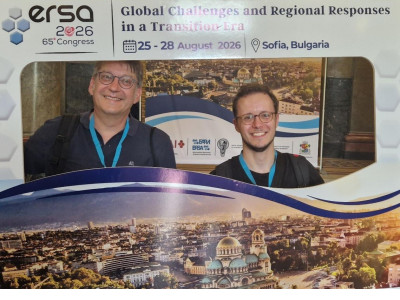
Prof. Ivo Mossig and Hannes Lehmann of the INF team presented their technical paper, "Filling Data Gaps in the Measurement of Income Inequality: A Complete Dataset of National GINI Coefficients, 1995–2019," at the 65th Conference of the European Regional Science Association (ERSA). Held in Sofia, Bulgaria, from 25 to 28 August 2026, the conference brought together more than 600 participants from 55 countries under the theme "Global Challenges and Regional Responses in a Transition Era."

"I was very pleased with the positive feedback on our approach of using a machine-learning algorithm based on a Gradient Boosting Machine to predict missing data," says Hannes Lehmann. Ivo Mossig adds: "The presentation also provided an excellent opportunity to introduce the CRC 1342 and our central database, WeSIS, to the regional science community." The approach helps to close substantial gaps in the available data, particularly for countries in the Global South. It now enables researchers to compare income inequality across different countries over time on the basis of a consistent and comprehensive dataset.

The dataset is available in WeSIS: https://wesis.org/indicators/2588

The corresponding Technical Paper No. 24 is available here: https://doi.org/10.26092/elib/5604


Contact:
Prof. Dr. Ivo Mossig
CRC 1342: Global Dynamics of Social Policy
Mary-Somerville-Straße 7
28359 Bremen
Phone: +49-421-218 67410
E-Mail: mossig@uni-bremen.de